The last chapter of Part 1, Chapter 24, described the near future we
can expect if we continue to let uncontrolled market forces largely
determine the level of production and the sorts of products that are
made ... and it’s a bleak prospect.
Reacting to the latest findings of theIntergovernmental
Panel on Climate Change, the UN Secretary-General
insisted that unless governments everywhere reassess their
energy policies, the world will be uninhabitable. Unless
action is taken soon, some major cities will be under
water, Mr. Guterres said in a message, which also forecast
“unprecedented heatwaves, terrifying storms, widespread
water shortages and theextinction of a million species of
plants and animals”. – from United Nations News.[34]
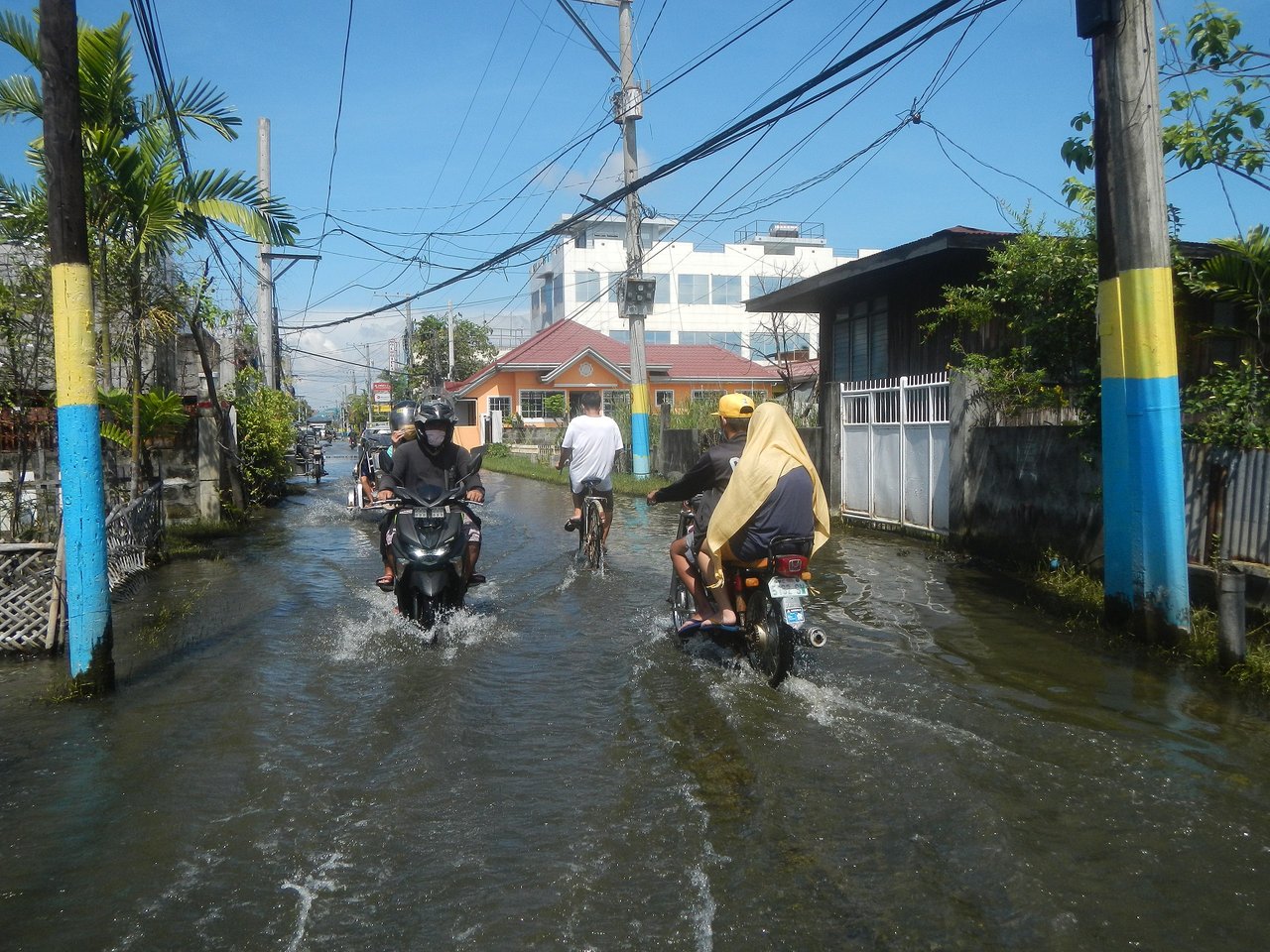
Figure 25.1: “some major cities will be under water”. [WMC]
We now move on from the analysis of the existing market economy
laid out in Part 1 and turn to look at ways in which we could change
direction and head for a rather better future than the one we appear to
be facing. In an overpopulated world that is undergoing a storm of
technological change, and on top of everything else is armed to the
teeth, improving the outlook won’t be easy. Yet humanity ought
to be able to do so much more if we could only set our mind
to it. Of course ‘setting our mind to it’ is a major part of the
problem, and we shall need to modify structures and incentives so
that we are encouraged along a new path rather than battling a
headwind every step of the way. Key will be changing the way our
economy works so that we are in control of the market rather than
letting the market control us. So the chapters that follow contain
policy suggestions based on the economic analysis in Part 1. They
assume that to achieve a better world, the goals of policy should
be:
An environmentally sustainable world that tackles
climate change, pollution and the destruction of
nature.
A fairer world where everyone has the opportunity for
a reasonable life.
Most people probably share these goals, although of course not
everyone does. If your aim was to be fabulously wealthy and lord it over
the impoverished but cowed masses, in a world that is fast becoming
arid and lifeless, then there is nothing to stop you from using the
economic analysis in this book to design some very different policies
(although I hope you won’t).
I should emphasise that while the chapters to come will contain
policy ideas, they do not provide or pretend to provide, a detailed set of
proposals that are feasible in legal, political and financial terms. That is
a challenge for all of us.
25.1 The Logic
The logic of the policies that will be described in the next chapters is
summarised here as a set of requirements. All of those requirements
follow from this first statement:
It is essential to moderate human impact on the environment
Note: an environmentally sustainable world is put as our
overarching requirement because on a dead planet‘fairness’ is
meaningless. Humans have survived under all sorts of horrible regimes –
while there’s life there’s hope. However, below we shall add the second
goal of a fairer world as being necessary to achieve the first, as well as
something we would wish for.
It follows that ...
We need to control and moderate global consumption of stuff
and energy.
Moderating consumption will require global agreement.
Global agreement will require greater equality between
nations, since poorer nations will not accept remaining poorer
than the richer ones indefinitely.
Greater equality is necessary between individuals as well as
between nations, if measures to limit consumption are to
be seen as fair and gain public support. Therefore, fairness
is added as a second goal, for practical as well as ethical
reasons.
Both automation and moderating the production of stuff,
reduce the amount of labour needed. Therefore, employment
in services that do not produce material goods is required, or
a universal basic income must be provided.
In order to finance the salaries of people who don’t produce
stuff (e.g. pensioners, those working in services provided for
free such as healthcare and education, those paid a universal
basic income), the production of stuff must be taxed in some
way. That puts up prices and reduces the competitiveness
of manufacturing as it is essentially paying the salaries and
pensions of all workers, not just of its own. So a country that
follows this policy must regulate its trade with others that
do not, or failing that, at least impose the relevant taxes in
such a way that imported and local manufactures are equally
affected, e.g. by taxing sales, not wages.
We need to build long-term sustainable investments that
improve the quality of life and reduce human impact.
We need to reduce the impact of farming: the space occupied,
the energy used, and pollution. We need to limit hunting and
fishing.
We need to limit world population, ideally reducing it as that
increases the level of the sustainable standard of living that
can be offered and reduces human impact on the environment.
Greater space per human would improve the quality of life, by
allowing more spacious houses and cities, and more national
parks and wild spaces.
To gain acceptance of lower consumption levels, we need to
curtail the propaganda in favour of consumption. Advertising
operates as a public misinformation service, promoting
consumption as the way to be healthy, happy and successful.
We shall want the opposite message to dominate.
Similarly we need to provide alternatives to material
consumption that are sustainable and provide interest and
fulfilment.
We need an education and a philosophy that explains and
supports the above goals.
25.2 Policy Overview
Based on the above requirements, a set of policy suggestions are listed
in the bullet points below, aimed at achieving or at least moving
towards the desired fairer and more environmentally sustainable world.
In the chapters that follow these ideas are explored one by one, and the
reasoning behind them explained.
Livelihoods – providing the means to live
Provide jobs for all who want them. Share out work.
Services will in many cases need to be cheap or free, or
purchased with a different currency that can be spent on
services but not material goods.
Promote fairness in the distribution of basic goods, if
necessary rationing them where supply has to be limited.
Invest for the long term.
Align economic boundaries with government boundaries,
since governments with economic responsibility must
also have some economic control.
Encourage resilient local economies, e.g. favour local
businesses via dual currencies (local plus national).
Reducing environmental impact and protecting the
natural world
Manage population.
Reduce impact of farming fishing & hunting.
Reduce impact of industry.
Adopt sustainable lifestyles – encourage moderation in
household consumption.
Public support, participation and well-being
Promote community and political participation.
Encourage support for international cooperation and
agreement.
Provide ways to take local spending decisions locally.
Curb advertising – replace with genuine and accountable
public information.
Limit inequality.
Make available pleasures that are environmentally
sustainable – arts, nature, sports, crafts, social life.
Improve quality of working life: working conditions,
variety & interest, job security, sick pay, pensions.
25.3 Summary
Unrestrained market forces are provoking environmental damage and
levels of inequality that endanger humanity. A change of direction is
urgently needed. This chapter proposed two main goals – an
environmentally sustainable world and a fairer world – and derived
some requirements from those goals.
Based on those requirements and the economic analysis in Part 1 of
this book, a set of policy ideas were then outlined. The next three
chapters discuss the suggested policies.